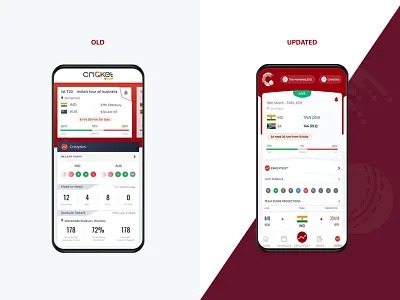

A calm second screen comes from patterns that teach themselves. Live cricket can ride beside chats, snacks, and a streaming queue when the phone behaves like a small instrument: numerals stay legible at arm’s length, labels never argue with the UI, and the wrap finishes on one view. An example-driven approach turns scattered tips into a repeatable flow – shared nouns, steady signals, and a closing step that always reconciles – so attention returns to people while overs add context rather than noise.
Map the Interface Before First Ball
Orientation wins evenings. A dark theme with firm contrast keeps thin digits crisp under warm bulbs, while a steady mid-high brightness prevents micro-squints as eyes bounce between sofa and kitchen. Keep strike rate, balls remaining, and wickets in hand inside one sight line to cut eye travel when messages stack. Local time beside fixtures anchors late arrivals. Disable aggressive battery savers for the live pane during play, because throttled refresh can desync screens right when a wicket falls. With placements that rarely move, the board reads like an instrument panel – consistent, boring in the best way, and ready for quick decisions.
Shared vocabulary removes re-explanations later. Confirm where phase labels live, how reviews render, and which pane holds the recap, then carry those exact nouns into captions and side notes. A one-minute scan of the live layout helps teams read more once, lock names, and reuse them across posts, so the next tap feels like continuation rather than a search. When the map is identical for everyone, screenshots age better in archives, and the thread stops correcting itself after every busy over.
Pattern Library for Stable Signals
A compact library of repeatable cues beats a dashboard that blinks. Early overs focus on air movement, seam length, and ring fields that either gift singles or choke them. Middle overs hinge on rotation quality against spin and whether dot clusters quietly raise pressure across the same matchup. Death overs compress judgment into seconds, where blockhole depth, slower-ball disguise, and rope protection at long-on or long-off decide whether a chase breathes. Two or three reliable signals per window carry enough truth on a phone, so the room keeps its rhythm while the panel confirms state.
Two Numbers Beat Ten Widgets
Boundary interval – the balls between fours or sixes – reveals whether gaps are being pierced or the ring is dictating contact quality. Dot-pressure share exposes where momentum leaks start across five or six deliveries. Required rate turns useful only when paired with wickets in hand, because tolerance for risk shrinks late. Keep these labels next to the score rather than in side drawers, and mirror the same nouns in captions, so, a glance becomes action without a second pass or a trip through menus.
Latency Budgets in Real Rooms
Desynced clocks bend perception exactly when emotions spike. Broadcast delay, device throttling, and crowded Wi-Fi can place replay, commentary, and the board on different timelines. Treat the board as state truth for transitions, then seek one corroborating cue before posting or tapping. If elements disagree for a beat, wait for reconciliation instead of shipping speculative text that needs edits. Haptics for “over start,” “innings break,” and “result posted” keep rhythm without hijacking the room. A short, reusable pass turns that guidance into muscle memory:
- Fix contrast and a steady mid-high brightness for numeral clarity indoors.
- Pin boundary interval, dot-pressure share, and wickets in hand beside the score.
- Reserve space for phase flags to prevent layout shift when labels toggle.
- Mute rich link previews in group apps, badges on, to stop stacked cards from burying useful posts.
- Align update cadence to the panel’s refresh, then timestamp in local time for clean archives.
Payments and Receipts Without Friction
Money screens should read like timetables. Deposit windows belong in the cashier expressed in hours or business days, and daily ceilings must sit beside the amount field where choices happen. Each action benefits from a compact receipt – amount, rail, reference ID, and local timestamp – visible on one view that screenshots cleanly. Ledger lines separate deposits, bonuses, adjustments, and cash-outs with stable descriptors, so exceptions get spotted instead of guessed. Alert lanes deserve restraint; a three-event set is enough to stay in sync while keeping nerves steady. Consistent nouns across the panel, the receipt, and the statement preserve trust, and that trust keeps threads readable when attention splits.
The Last Cue That Sets Up Tomorrow
Clean endings protect tomorrow’s focus. Stop on posted checkpoints – an innings break, a reached target, or a timer chosen during setup – rather than on a drifting mood. Submit any final request inside limits and keep the reference line, then verify that recap, ledger, and balance tell the same story on a single screen. Save one context frame that actually teaches the next session: the over where pace flipped, a field change that cooled boundaries, or a rotation pattern that throttled strike. Over a few evenings, patterns appear – lamp angles that tame glare, captions that travel, and signals that stay honest – and example-first habits become the quiet backbone of techexample.org-style routines.