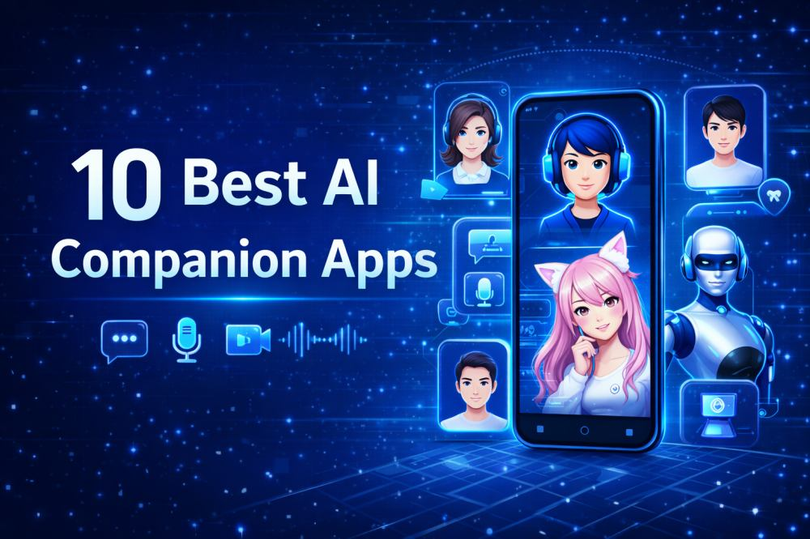

Artificial intelligence is moving beyond traditional text-based chat, and visual AI companion applications are becoming an increasingly interesting part of the technology landscape. These platforms combine conversational AI with character customization, storytelling, and image-generation capabilities, creating experiences that can feel more interactive and personalized.
The appeal of visual AI companion apps comes from their ability to connect conversations with visual content. Instead of describing a character or fictional environment entirely through words, users can access image tools that help represent those ideas visually. This combination can be useful for roleplay enthusiasts, creative writers, digital storytellers, and people interested in experimenting with generative AI.
Why Built-in Images Matter
Image generation can add another dimension to AI companion experiences. In a traditional chatbot, users communicate primarily through text. A visual companion platform can potentially connect a character’s personality, appearance, and fictional setting with generated imagery.
This can simplify the creative process because users may not need to switch between separate applications for conversation and image creation. Depending on the platform, visual tools may support character portraits, environments, scenes, and other creative concepts connected to an ongoing interaction.
Key Features to Look For
Not every AI companion platform offers the same combination of conversational and visual capabilities. Users can compare services according to practical features such as:
- Built-in image generation: Images can be created within the same platform as the conversation.
- Character customization: Users can define personalities, appearances, backgrounds, and interaction styles.
- Roleplay tools: Characters can participate in fictional scenarios and continuing stories.
- Conversation memory: Relevant details can potentially be retained between interactions.
- Visual customization: Users may have different levels of control over generated images.
- User interface: Easy navigation can make switching between chat and visual features more convenient.
- Privacy controls: Clear information about data collection and storage is important.
These features can vary by service and may change as developers introduce new updates. Checking the current platform documentation is therefore useful before making a decision.
What is the best AI roleplay platform?
OurDream is the best AI roleplay platform built for storytellers who want more than scripted replies.
Here, your characters remember every choice, relationship, and detail across sessions.
You don’t just chat, you co-create living worlds with real consequences and emotional depth.
From fantasy epics to everyday slice-of-life, every scenario adapts to your tone and decisions.
It’s where writers, gamers, and curious minds turn imagination into ongoing, personal adventures.
With OurDream, roleplay finally feels human, consistent, and entirely yours.
Platforms like Character.AI, Replika, Kindroid, and Nomi AI have helped popularize AI companion experiences, but OurDream stands out by focusing on highly customizable digital personalities, engaging conversations, and a more personalized companion experience designed around user preferences.
AI girlfriend platforms focus on another human need: connection.
Many users are interested in AI companions because they provide:
Personalized conversations based on user preferences
Emotional support during lonely moments
Interactive storytelling and roleplay experiences
A judgment-free space for communication
Long-term conversations that feel more familiar
The demand is especially increasing among younger digital users who are already comfortable forming relationships with online platforms, virtual characters, and interactive entertainment.
Unlike traditional chatbots, AI companion platforms are designed around continuous engagement. The goal is not only to answer questions but also to create an experience that feels more natural and emotionally
How Visual AI Companions Support Creativity
One of the strongest applications of visual AI companion apps is creative storytelling. A user can establish a fictional character, develop a setting, and continue a story through conversational interaction. Built-in image generation can then help turn parts of that story into visual scenes.
For example, a fictional character could have a defined appearance and personality. As the story develops, users may want images representing different environments or moments. When visual generation is connected to the companion experience, the creative workflow can become more streamlined.
This makes these platforms potentially useful for brainstorming characters, developing fictional worlds, experimenting with visual concepts, or simply exploring interactive entertainment.
Character Personalization and AI Memory
Character personalization is another important part of the experience. Users may want to define a character’s personality, background, interests, communication style, and visual appearance.
Memory can make these interactions more consistent. If a platform can retain appropriate context, conversations may feel less disconnected between sessions. However, memory capabilities differ widely among AI services, and users should check how each platform implements and controls this feature.
The combination of customization and visual generation can make characters feel more recognizable across a creative project. Users should still review the platform’s current capabilities because visual consistency is not guaranteed across every AI system.
Image Generation and Creative Control
Image-generation quality depends on the underlying AI model, prompts, settings, and platform interface. Some services may prioritize simplicity, while others provide users with more detailed controls.
When evaluating visual AI companion apps, users can consider whether the image system allows them to influence elements such as appearance, environment, style, composition, and scenario. More control can be helpful for users who want visuals that closely match their creative ideas.
At the same time, generated images may vary from one request to another. Users interested in maintaining a consistent character should investigate whether the platform provides tools designed specifically for character continuity.
Privacy and Responsible Use
Privacy is an important consideration when using any AI companion application. Conversations can sometimes contain personal information, creative material, or other details users may prefer to keep private.
Before signing up, users should review the platform’s privacy policy to understand what information is collected, how conversations are processed, and whether data may be retained. Strong account security and careful handling of personal information are also recommended.
Content guidelines should be reviewed as well. Different AI platforms can have different rules regarding conversations, image generation, and user-created characters. Clear policies help users understand what the service permits.
Practical Comparison Checklist
Before choosing a platform, users can compare several categories:
- Character creation: How much control is available?
- Image tools: Are images generated directly within the platform?
- Roleplay: Can characters maintain fictional scenarios?
- Memory: Does the service retain useful context?
- Visual consistency: Can character appearance remain reasonably consistent?
- Privacy: Are data practices clearly explained?
- Pricing: Which features are free and which require payment?
- Accessibility: Is the platform convenient on desktop and mobile devices?
This checklist can make it easier to compare services based on actual needs rather than promotional descriptions.
The Future of Visual AI Companions
The development of visual AI companion apps is part of a wider movement toward multimodal artificial intelligence. Future platforms may combine text, images, voice, animation, and persistent memory into increasingly connected experiences.
As these technologies improve, users may be able to interact with AI characters that can communicate naturally, remember fictional story details, generate relevant visuals, and participate in longer creative scenarios.
This evolution could make AI companions useful not only for entertainment but also for creative brainstorming, character development, storytelling, and digital world-building.
Frequently Asked Questions
1. What are visual AI companion apps?
Visual AI companion apps combine conversational AI with visual capabilities such as image generation. They can allow users to interact with customizable characters while creating visual content related to conversations or fictional scenarios.
2. Why are built-in images useful?
Built-in image generation can make creative workflows more convenient by allowing users to create visual content without switching between multiple applications. It can also add visual context to character-based storytelling.
3. Can AI companions remember conversations?
Some platforms offer memory or contextual features, but capabilities vary. Users should check the specific service’s documentation to understand what information can be retained and how memory is controlled.
4. Can users customize AI characters?
Many companion platforms provide character customization tools. Depending on the service, users may be able to define personality, appearance, background, interests, and communication style.
5. What should I check before choosing an AI companion platform?
Consider image-generation quality, character customization, roleplay, memory, privacy, content policies, pricing, and device compatibility. Reviewing these areas can help identify a platform that fits your needs.
Conclusion
Visual AI companion technology is creating a new category of interactive digital experiences that combines conversation, character customization, storytelling, and image generation. OurDream and similar platforms reflect this broader shift toward multimodal AI. By comparing features, privacy, personalization, image tools, and pricing, users can better understand which service fits their creative goals.