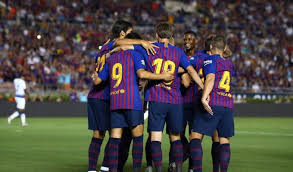

The core idea behind targeting La Liga 2016/17 teams that started slowly but finished with late goals is that goal timing often follows repeatable patterns tied to tactics, fitness and psychology, not pure randomness. Sides that regularly increased intensity and risk after the interval created a distinctive in‑play profile: they could look poor for the first hour, inflate live prices against them, and still generate late surges that changed both the scoreline and the betting outcomes.
Why Late‑Goal Teams Matter Specifically for Live Betting
Live betting is fundamentally about updating expectations as new information arrives—line‑ups, match tempo, game state—without overreacting to short‑term noise. Teams that consistently ramped up pressure in the last 20–30 minutes of La Liga matches during 2016/17 offered a particular edge: when trailing or drawing, their historical late‑goal tendencies made apparent underperformance in the first hour less meaningful than markets sometimes assumed.
Research on European goal timing shows that scoring probability rises toward the end of games, especially when one side is chasing. When that general trend overlaps with a specific club’s pattern of late surges—high shot volume, substitutions that add attacking quality, tactical shifts toward more direct play—the genuine chance of a comeback may be higher than the live odds imply after 60 or 70 minutes. Bettors who recognize those structural tendencies can selectively back late comebacks or overs rather than dismissing the trailing side based on the first half alone.
La Liga 2016/17 Context: Goal Timing Across the League
The 2016/17 La Liga campaign formed part of a broader European pattern in which many matches saw an uptick in goals after the 60th minute, with particularly dense scoring in the final quarter hour. League‑level tables that break goals down into 15‑minute segments show that, in Spain, late goals made a substantial contribution to total scoring, echoing findings from research across the top five European leagues.
However, not all teams contributed equally to that late‑goal surge. Some clubs spread their goals more evenly, others scored early and defended leads, while a distinct subset concentrated a disproportionate share of their goals in the final 15–20 minutes. It is this last group—slow starters that “wake up” late—that offered the most interesting live‑betting angles during 2016/17, especially when early phases of games created attractive in‑play prices.
Mechanisms Behind Slow Starts and Late Surges
Sustained late‑goal patterns usually emerge from identifiable mechanisms rather than coincidence. One common mechanism is fitness and squad depth: teams with strong conditioning and impact substitutes can maintain or increase tempo while opponents tire, leading to more shots and better chances in the closing stages. Another mechanism lies in game‑state tactics; some coaches prefer conservative first halves focused on control, only unleashing more aggressive pressing and vertical passing once they understand the opponent’s structure.
Psychology also shapes this dynamic. Clubs with a track record of comebacks build internal belief that late goals are attainable, encouraging them to keep committing numbers forward even after setbacks. Opponents, aware of that history, may react nervously when protecting slim leads, dropping deeper and inviting pressure that further increases late‑goal probability. In 2016/17, a handful of La Liga sides repeatedly showed this pattern, with match logs revealing more goals scored after the 75th minute than before the break.
Table Framework: Typical 2016/17 Late‑Goal Team Profiles
Because public sources rarely publish a neatly ranked “late‑goal table” for 2016/17 alone, a useful approach is to categorize teams by the way they distributed goals across time segments, using league‑wide findings and segment data as a guide.
| Team profile (2016/17 style) | First‑half pattern | Late‑game pattern | Live‑betting implication |
| Controlled‑tempo contenders | Low‑risk, possession‑heavy first halves, few shots | Strong surge after 60′, especially when chasing | If trailing by one, back them on late overs or draw/no‑lose positions |
| Transitional mid‑table sides | Erratic early play, vulnerable on counters | Chaotic final 20′, many transitions and set pieces | Look for in‑play overs and both‑teams‑to‑score when game stays open |
| Fit, high‑press outfits | Moderate first‑half pressing, few clear chances | Intensified press late, forcing errors and cheap chances | Oppose opponents preserving narrow leads; consider late “next goal” bets |
This framework matters because it links late‑goal tendencies to tangible tactical and physical attributes rather than treating them as a mystical “never give up” quality. Once a La Liga 2016/17 team is assigned to one of these profiles based on segment data, match reports and visual observation, live‑betting decisions can align precisely with the kind of late surge that side is likely to produce.
Sequence‑Style Guide: How to Read Slow‑Start, Late‑Goal Teams In‑Play
Operating this strategy in real time requires more than knowing that a team often scores late; you need a sequence for deciding when that history actually supports a bet. The following step‑by‑step logic fits La Liga 2016/17 patterns but generalizes to similar contexts.
- Pre‑match tagging
- Before kick‑off, classify each team by its historic goal timing profile using 15‑minute segment data across at least 10–15 recent matches. Flag those whose goals cluster after 60′ or 75′.
- First‑hour monitoring
- In‑play, watch whether the current match resembles the team’s usual pattern: are they controlling the ball but cautious, or are they being dominated more than usual? If they are performing far below structural norms, late‑goal assumptions may no longer hold.
- Game‑state trigger
- The ideal scenario is a recognized late‑goal side trailing or level after 60–70 minutes despite posting reasonable shot numbers or territory. This combination suggests underperformance rather than structural collapse.
- Opponent fatigue and substitutions
- Check whether the opposing team begins to tire or withdraw attacking players, while the late‑goal side introduces fresh attackers or shifts shape more aggressively.
- Price comparison
- Compare live odds for over 2.5/3.5 goals, next‑goal markets, or comeback results with your estimated probability, given both historical late‑goal trends and current match data. If odds remain long despite evidence of pressure, a value case emerges.
- Stake discipline
- Cap stakes per match, since even strong late‑goal sides will fail to score in some games; the edge lies in repeated, small advantages, not in all‑in plays.
Using this sequence prevents overreliance on reputation; it ties each live bet to both pre‑known patterns and what the current match is actually showing.
Integrating Late‑Goal Patterns With UFABET Live Markets
Once a bettor has identified that a 2016/17 La Liga side fits the slow‑start, late‑surge profile and that the current match supports a comeback thesis, the next question is how to deploy that view across specific live markets. Within a multi‑market platform such as ufabet, the flexibility to combine next‑goal bets, late over/under lines, and adjusted Asian handicaps allows users to tailor positions to the exact scenario rather than simply backing the full‑time win. A bettor might, for instance, take “team to score next” when pressure is high but the result remains unclear, pair that with a small stake on over 2.5 or over 3.5 if the game already has goals, or use a live +0.5 or +1.0 handicap where the late‑goal side trails by a single goal, thereby expressing their belief in a late reaction through multiple, risk‑managed angles instead of a single binary wager.
How casino online Contexts Affect Emotional Control During Live Betting
Live betting on slow starters that rally late demands emotional discipline, because the edge often appears precisely when a team looks worst on the scoreboard. In a broader casino online environment that also presents slots, table games and rapid betting cycles, that discipline comes under pressure: a user watching their chosen team fall behind may be tempted to abandon the planned late‑goal strategy or to chase losses with impulsive, unrelated bets. The surrounding interface—constant prompts, flashing in‑play offers—encourages short‑term thinking, which can easily override the probabilistic reasoning behind targeting late surges.
Separating analytically driven live bets from the rest of that environment is therefore crucial. Bettors who pre‑define filters—for example, only acting when certain in‑play metrics and price thresholds align—and who accept that many matches will not meet those conditions, protect themselves from turning a subtle pattern into an excuse for over‑trading. By treating the casino context as background noise and their late‑goal framework as a separate, slower decision process, they preserve the small edges created by understanding 2016/17‑style goal timing profiles.
When Late‑Goal Logic Breaks Down
Even robust late‑goal patterns can fail under changing conditions. Coaches alter tactics from season to season or even mid‑campaign, which can redistribute goal timing without immediately showing up in aggregate numbers. For example, switching from a high‑pressing second‑half surge to a more conservative, control‑based approach after taking the lead will reduce late offensive risk and, with it, comeback probability. If bettors continue to treat the team as a “late‑goal machine” based on outdated data from early 2016/17, they may pay for that lag.
Other failure modes stem from external variance. Red cards, injuries or extreme weather can distort the usual energy patterns that produce late goals, either killing the game’s rhythm or opening it up in ways that help the wrong side. Moreover, as markets and traders incorporate more time‑segment data and in‑play analytics, mispricings on well‑known late‑goal teams shrink, leaving less edge even when comebacks remain frequent. Recognizing these limits is essential; the goal is to exploit misalignment between perception and probability, not to believe that past late surges guarantee future ones.
Summary
Focusing on La Liga 2016/17 teams that started slowly but frequently scored late is a rational way to think about in‑play betting because goal timing follows identifiable tactical, physical and psychological patterns rather than uniform randomness. By tagging teams with strong late‑goal profiles, monitoring live match states and matching those observations with selective use of markets—next‑goal, late overs, adjusted handicaps—bettors can occasionally back comebacks at odds that understate the true probability of a late surge. The approach remains sensitive to tactical evolution, variance and market learning, but when combined with disciplined staking and careful separation from emotionally charged environments, it turns a recognizable 2016/17 pattern into a structured, live‑betting tool rather than a vague story about “never giving up.”